

What Makes Poly Mailers a Practical Shipping Choice?
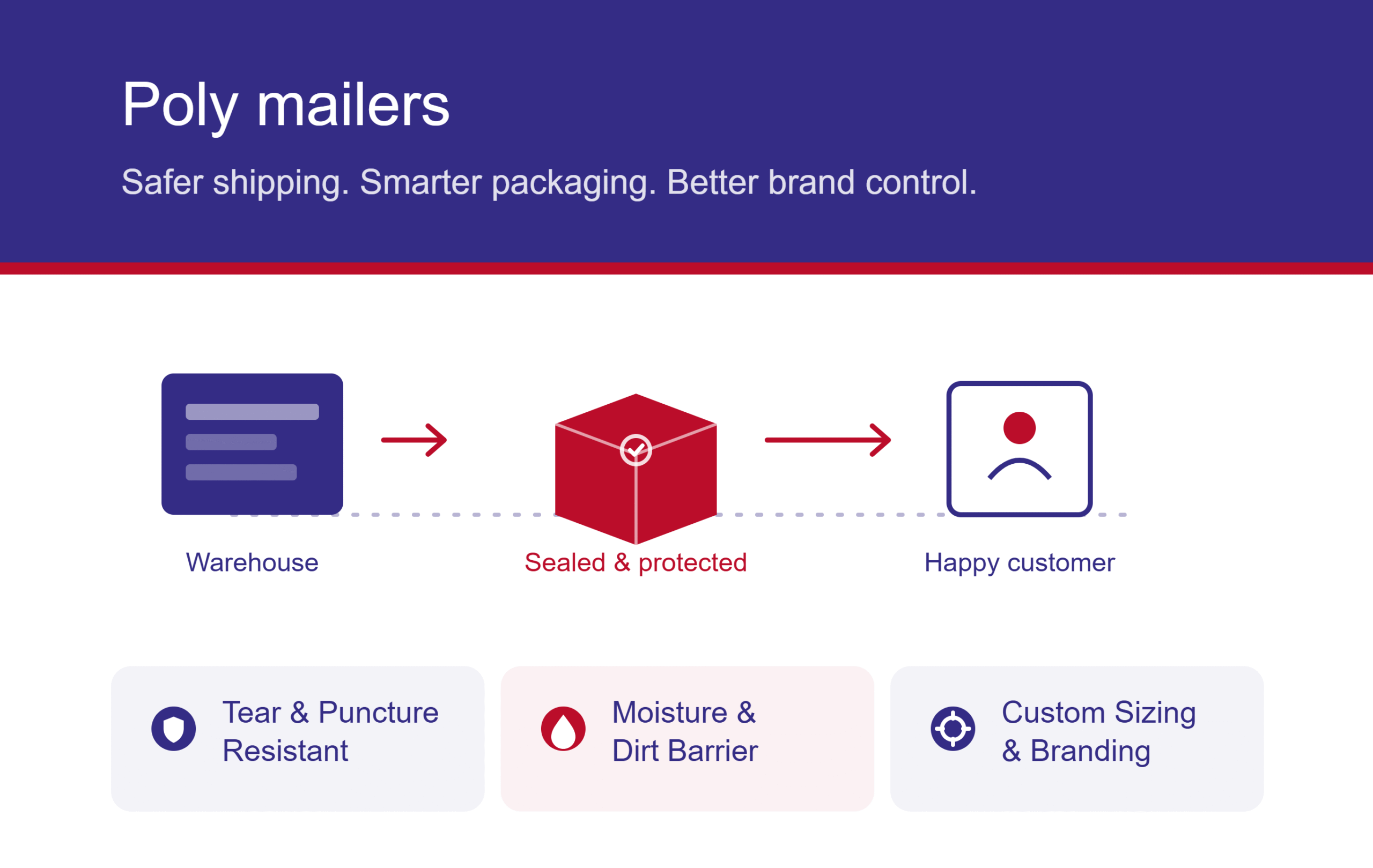
Poly mailers help businesses ship flexible products in a lightweight, sealed, and protective package. They are often used for apparel, fabric goods, documents, accessories, and products that do not need rigid box protection. The right mailer can help reduce wasted space, protect against dirt and moisture, resist tearing and punctures, and make packing faster for teams.
Key things businesses should review before choosing a mailer include product size, product weight, film strength, seal quality, privacy needs, branding requirements, order volume, and sustainability goals.
The main takeaway: A good mailer is not just a shipping envelope. It protects the product, supports the packing workflow, improves the delivery experience, and helps the brand look more consistent when the order reaches the customer. For businesses that need reliable mailers with sizing, printing, material, and order volume support, PolyPak Packaging is a practical place to start.
Why Packaging Choices Matter Before the Shipment Leaves
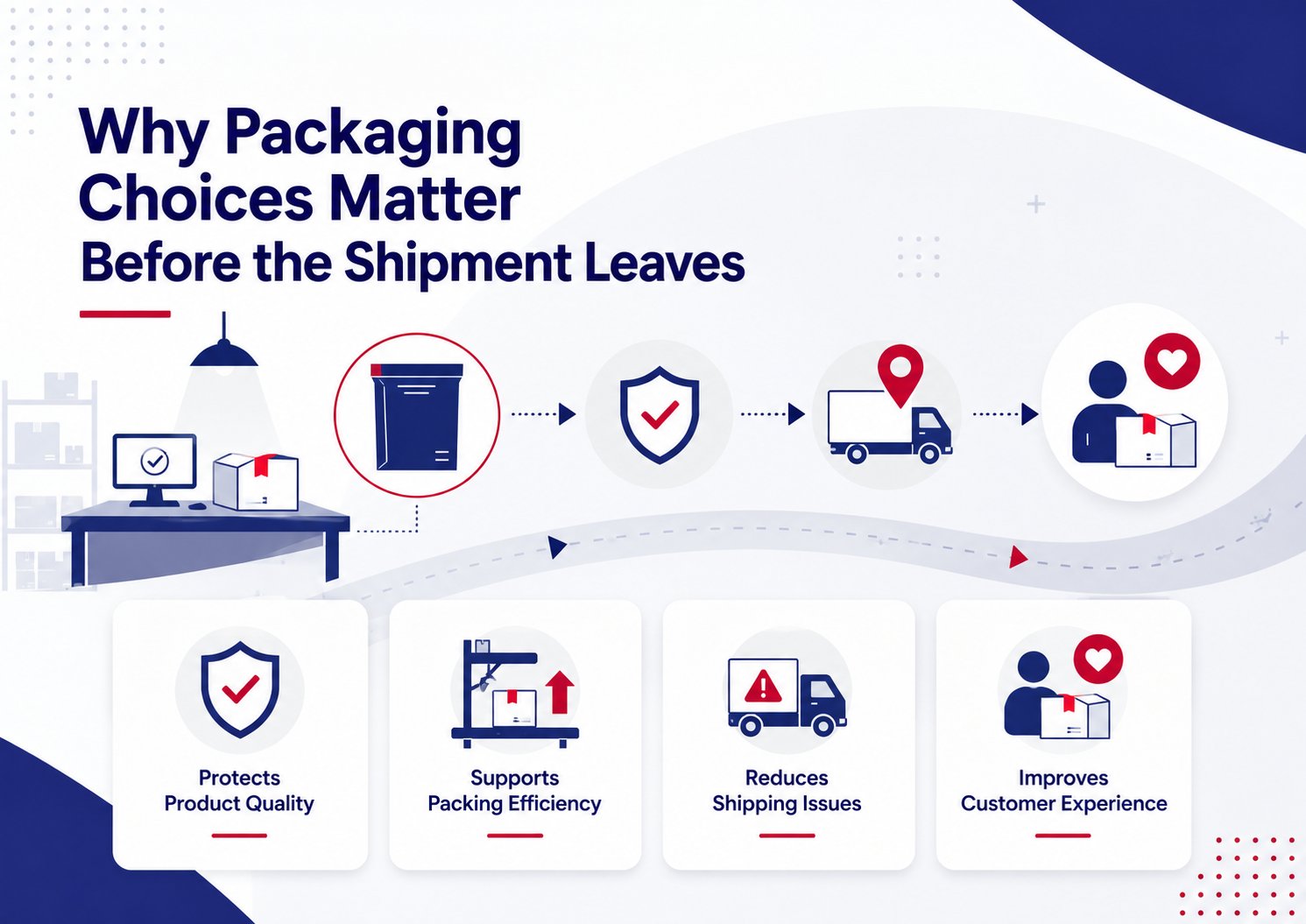
A shipment can leave the warehouse looking fine and still arrive with scuffs, tears, dirt, moisture exposure, or poor presentation. That is where packaging choice starts to matter.
The product may be good. The order may be correct. The customer may be ready to buy again. But if the package arrives damaged or careless, the customer sees the packaging before they see the product. That first physical impression can shape how they feel about the brand.
This is a real concern for e-commerce brands, retail suppliers, fulfilment teams, warehouse managers, and purchasing teams that ship every day. Packaging affects more than delivery. It affects packing speed, storage space, replacement risk, return handling, and customer trust.
A mailer that is too thin can tear during handling. A mailer that is too large can let the product shift inside. A weak closure can make the package feel unreliable and the list goes on.
That is why packaging should be reviewed before volume grows. Once orders increase, small packaging problems become repeated operational problems. The right mailer helps the team pack faster, reduce unnecessary bulk, and send products out with more confidence.
Need to check if your current mailer still fits your product and shipping volume? Speak with PolyPak Packaging before your next packaging run.
What Are Poly Mailers and Where Do They Fit Best
Poly mailers are lightweight plastic shipping envelopes made from polyethylene. They are flexible, durable, and available in different sizes, styles, and material options. They are used for products that can bend, fold, or sit flat without needing a rigid box.
They are a practical fit for items such as:
- Apparel
- Soft accessories
- Fabric products
- Documents
- Catalogues
- Lightweight retail goods
- Small flexible products
The biggest advantage is fit. A box keeps its shape even when the product inside is soft. A mailer can sit closer to the shape of the product. This can reduce empty space and make storage easier for packing teams.
Poly mailers also work well when teams need simple packing steps. There is no box assembly. There is less void fill to manage. The package can be sealed quickly. For busy shipping teams, that difference matters during daily order flow.
Good mailer selection still depends on the product. A single apparel item does not need the same mailer as a heavier multi-item order. At times, document shipments require a different thickness than packages that face more pressure during handling. Size, thickness, opacity, seal type, and material choice should match the item being shipped.
When a Mailer Works Better Than a Box
A mailer often works better than a box when the product is flexible, lightweight, and not easily crushed. For soft goods, boxes can add extra weight, extra storage needs, and extra packing steps that the product may not require.
Poly mailers are commonly chosen because they are lightweight, space-efficient, durable, customizable, and recyclable in many use cases. They can also adapt to the product shape better than a rigid box, which helps reduce wasted space during storage and shipping.
For teams comparing packaging options, this guide on choosing between mailers and boxes for flexible products is a useful next step.
If your team ships soft goods daily, compare the product needs first, not just the package type.
When Product Protection Needs a Closer Look
A mailer is not the right package for every product. Fragile, sharp, heavy, or crush-sensitive items need added cushioning, a stronger film, or a different packaging approach.
This is where product review matters. The package should match the item’s shape, surface, weight, and expected handling. A sharp edge can stress the film. Fragile items can be damaged by pressure. Heavier products need stronger material, better sizing, or added internal protection.
Before choosing a mailer, check the product risk first.
Talk to PolyPak Packaging before your next order to choose the right mailer size, material, seal type, and protection level for your shipment needs.
The Shipping Risks That Good Mailers Help Reduce
Shipping puts every package through repeated handling. Packages may rub against other parcels. They may move through bins, belts, trucks, shelves, and doorsteps before reaching the customer. Even when the product is not fragile, the outside package still needs to hold up.
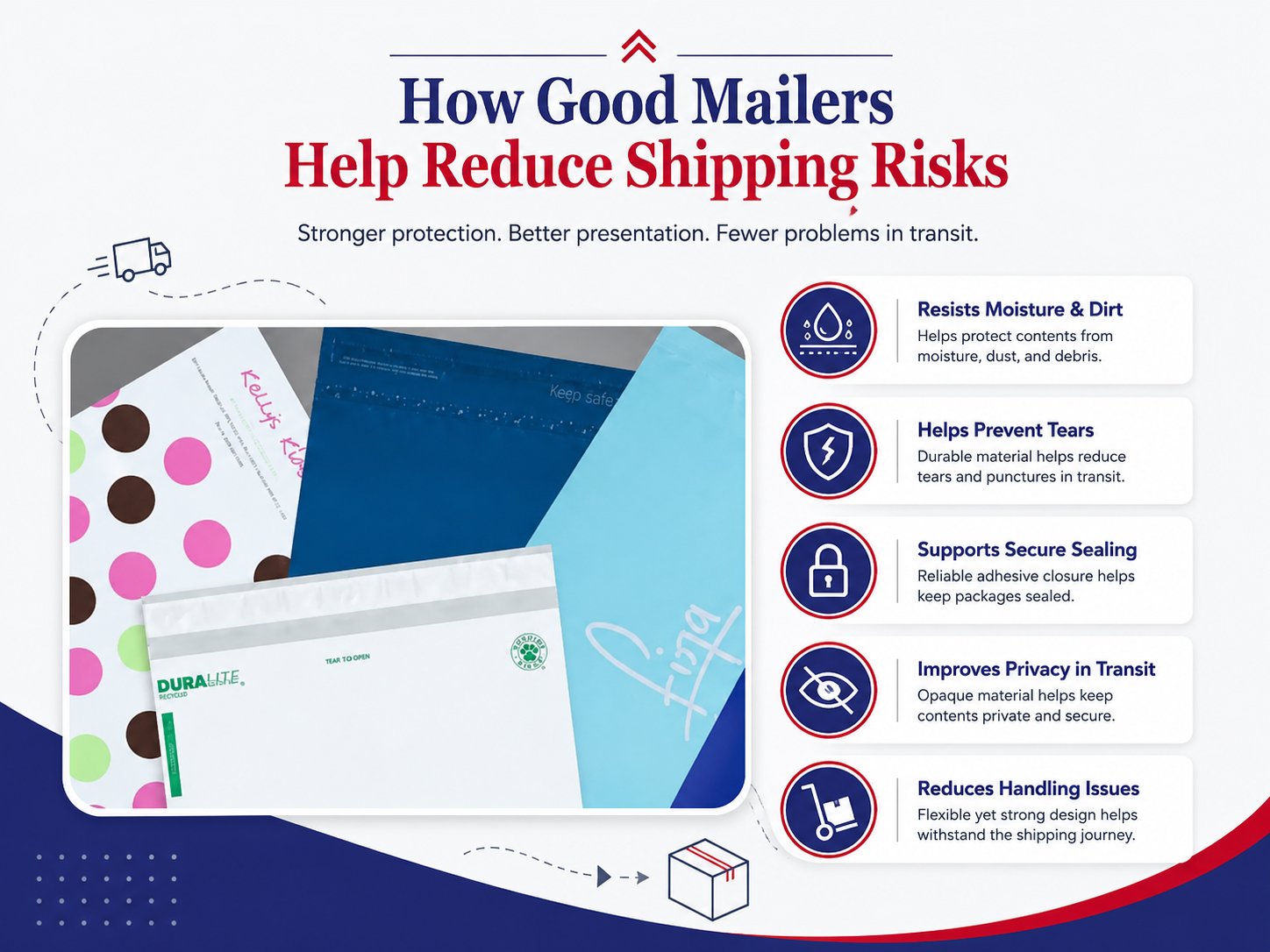
Good mailers help reduce common shipment risks such as:
- Wear during transit
- Tears from handling
- Punctures from pressure or contact
- Dirt exposure
- Moisture exposure
- Poor privacy
- Weak sealing
- Damage during packing, loading, and unloading
High quality mailers are described as durable and flexible, with resistance to wear, tears, punctures, dirt, and water. They can also be easy to pack and seal, with adhesive closure helping to keep products secure during shipping.
The important point is simple. A mailer should not be treated as a basic envelope. It is part of the shipping system. Thickness, closure, size, opacity, and product fit all affect how the shipment performs.
When a business orders the wrong mailer, the problem may not appear immediately. It may show up as torn packages, poor presentation, product movement, packing delays, or avoidable customer complaints. When the mailer fits the product and shipping process, the team gets better protection with fewer packing complications.
Moisture, Dirt, and Handling Exposure
Packages do not always travel through clean, dry conditions. A good mailer helps create a practical barrier against common transit exposure. This matters most for apparel, fabric goods, documents, and soft products, where presentation matters when the package is opened.
A clean, sealed mailer helps the customer feel that the order was handled with care. It also gives the packing team more confidence before the shipment leaves.
When the mailer protects both the product and the presentation, the delivery feels more controlled from warehouse to doorstep.
Tearing, Punctures, and Seal Reliability
Tears usually start small. A corner catches on another parcel. A product edge presses against the film. A package gets pulled from a bin too quickly. If the mailer is not matched to the product, that small stress can become a visible tear before the customer receives the order.
Good mailer selection should look at film strength, product edges, weight, and closure quality. A reliable adhesive seal also matters because it keeps the contents secure without adding extra packing steps. For teams reviewing repeated shipment damage, this guide on how poly mailers help protect items during shipping is a useful next step before changing package size or material.
A reliable mailer depends on the full specification, not one feature alone. The right size, closure, thickness, and material work together to reduce weak points before the package enters transit.
Privacy and Presentation During Transit
A package does not need to show everything inside. For apparel, documents, personal accessories, and branded products, privacy is part of the customer experience.
Opaque mailers help protect the contents from view during transit. This makes the package feel more secure and intentional. It also improves presentation. The customer receives a clean, sealed package instead of an exposed or careless looking shipment.
Privacy is not only about concealment. It is about making the shipment feel handled with care from the first touchpoint to the final delivery.
Review your mailer size, thickness, seal type, and opacity with PolyPak Packaging now to reduce shipping risks before they turn into customer issues.
Why Online Sellers Use Poly Mailers at Scale
Online sellers use mailers because packaging has to keep up with daily order flow. A growing store may start with a few shipments a week. Then the same team may need to pack dozens, hundreds, or more orders in a repeatable way. At that point, packaging becomes part of the operating system.
Mailers support that shift because they are lightweight, flexible, easy to store, and quick to seal. They work well for apparel, soft goods, accessories, and other products that do not need rigid box support. For many online operations, that means fewer packing steps and less wasted space.
Packaging also affects shipping cost control. A bulky package can increase dimensional weight concerns. A poorly fitted package can require more filler. A slow packing format can create pressure during busy periods. The right mailer helps reduce these everyday friction points.
For brands building packaging around online order flow, what online businesses should know about poly mailer use gives helpful context on product protection, storage efficiency, brand design, and daily fulfillment planning.
When packaging fits the pace of the business, it becomes easier to pack consistently, ship confidently, and maintain a cleaner experience from order processing to delivery.
Warehouse Space and Packing Speed
Boxes need space before they are used. They need space after they are assembled. They often need tape, filler, and more handling at the packing station.
Mailers store flatter and can be dispensed quickly. That matters when teams work through repeat orders. A cleaner packing station can help reduce delays, especially during seasonal demand or campaign driven order spikes.
Faster packing should still protect the product. Speed only helps when the package is right.
Customer Experience After Delivery
The customer does not see the warehouse process. They see the package that arrives.
If the mailer is torn, dirty, oversized, or poorly sealed, the order starts with doubt. If it is clean, fitted, private, and easy to open, the delivery feels more controlled. That moment can support trust, especially for repeat buyers.
Good packaging does not need to be complicated. It needs to feel right for the product.
Plan your next mailer order with PolyPak Packaging before packaging slows fulfillment or affects delivery quality.
How Custom Mailers Turn Packaging Into a Brand Touchpoint
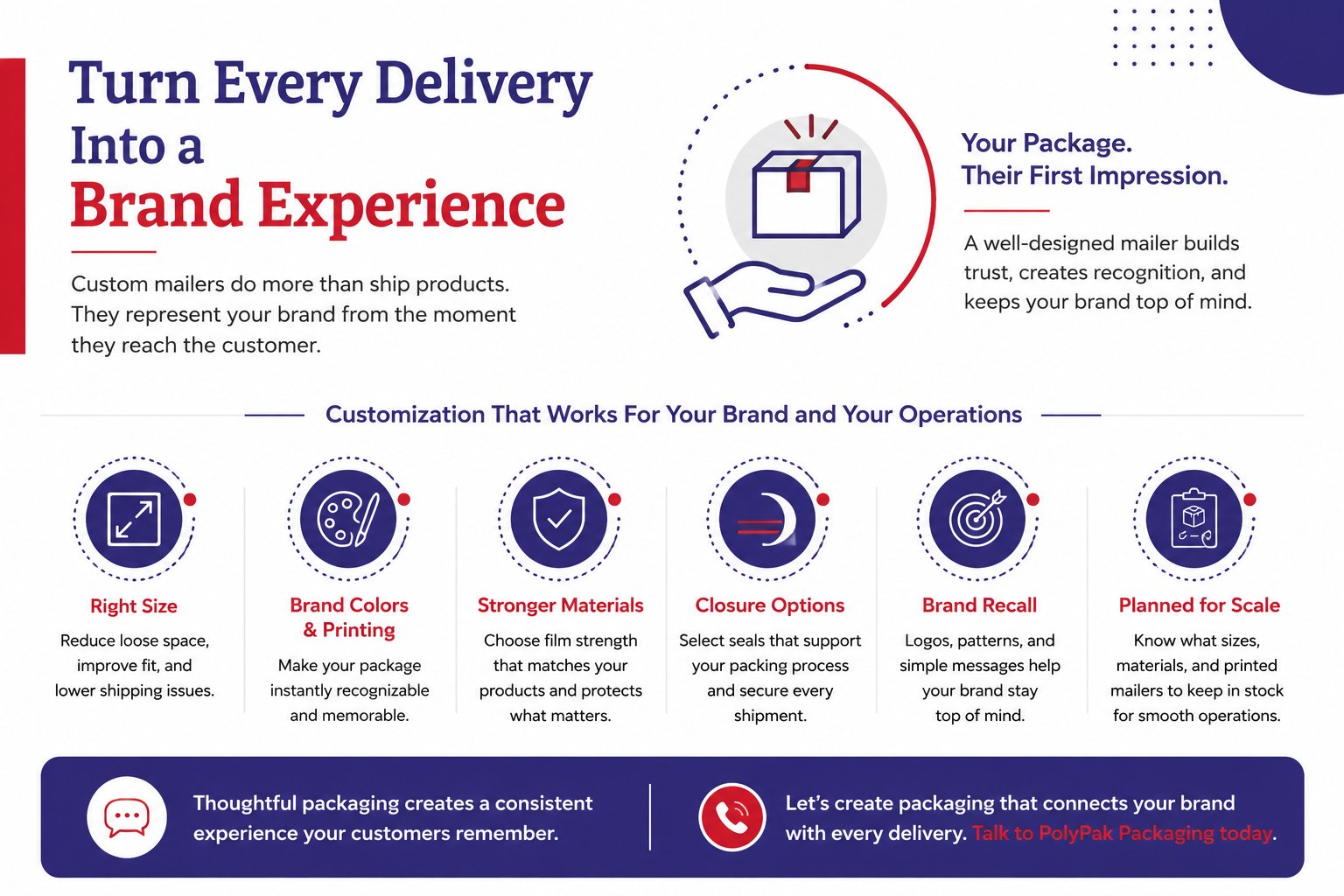
A package is often the first physical brand touchpoint in an online order. The customer may have seen the website, emails, and checkout page, but the package is what lands in their hands. That makes the mailer part of the brand experience.
Custom poly mailers can support that experience through size, colour, print, material choice, and closure format. A business can use the mailer to create a more consistent delivery experience instead of relying on plain, mismatched packaging.
Customization is not only about looking better. It can also solve operational problems. A custom size may reduce loose space. A stronger film may fit heavier product bundles. A printed mailer may help the package feel more recognizable. A specialty seal may support the way the team packs and ships.
Printed packaging can also help brand recall. Logos, colours, patterns, and simple messages can make the package easier to recognize when it arrives. The goal is not to overload the mailer with design. The goal is to make the delivery feel connected to the brand.
For higher volume shippers, this is where packaging choices should become more planned. The team should know which products need which sizes, which mailers carry printed branding, and which options are kept in stock for recurring orders.
Why Custom Sizing Matters
A mailer that is too large can create movement inside the package. A mailer that is too small can stress the seal or make packing difficult.
Custom sizing helps the mailer fit the product more closely. That can improve presentation, reduce excess material, and make packing easier for the team. It also helps build a more repeatable process when the same products ship often.
Good size planning starts with the product, not the package catalogue.
How Printed Mailers Support Brand Recall
Printed mailers can carry logos, brand colours, patterns, or simple design elements. That turns the package into more than a shipping envelope.
For repeat customers, branded packaging can create familiarity. For first time customers, it can make the order feel more intentional. A clean printed mailer often works better than a crowded one.
Keep the design clear. Let the package support the brand without making it look overloaded.
Want every shipment to look more consistent and brand ready? Talk to PolyPak Packaging about custom sizing and printed mailer options before your next production run.
How To Plan Wholesale and Bulk Mailer Orders
Wholesale and bulk ordering should not start with price alone. Price matters, but it should not be the only filter. The better question is whether the mailer fits the product, the packing process, the brand, and the expected shipping conditions.
Start with the product list. Group items by size, weight, flexibility, and risk. A single T-shirt does not need the same mailer as a multi item apparel order. A document shipment does not need the same package as a soft retail bundle.
Then review the order volume. Businesses ordering bulk poly mailers should know which sizes move fastest, which products need custom printing, and which mailers should stay in reserve for seasonal spikes.
Material choice also matters. Film strength, opacity, seal type, recycled content, and print requirements all affect the final order. A mailer that looks cheaper at first can become expensive if it creates packing delays, poor fit, weak presentation, or more replacement requests.
Large orders should also support consistency. When every package uses the right size and style, the packing team works with fewer exceptions. That helps the brand look more organized and helps the team avoid last minute substitutions.
This is also where supplier choice matters. Before placing a larger packaging order, it helps to review what to look for in a poly bag supplier so the order supports product fit, customization, quality, and repeat supply needs.
Stock Mailers, Custom Runs, and Repeat Orders
Stock mailers are useful when a business needs quick access to common sizes. They work well for standard products, early stage order volume, or backup inventory.
Custom runs make more sense when the same product sizes, brand requirements, or shipping needs repeat often. At that point, the package should support the workflow, not slow it down.
Repeat orders should be planned before inventory gets tight. Waiting until the last case of mailers is opened can lead to rushed decisions, inconsistent packaging, and avoidable fulfilment pressure.
Why Bulk Poly Mailers Need More Than Price Review
Price matters, but it should never be the only reason to choose bulk poly mailers. A lower cost mailer that tears, fits poorly, or weakens the delivery experience can create more work after the shipment leaves.
Review thickness, seal strength, opacity, product fit, storage space, recycled content, and print needs before ordering. Large volume packaging should make fulfillment smoother, not create daily compromises.
Planning a larger mailer order? Ask PolyPak Packaging to review your size mix, material needs, and reorder timing before the next purchase.
Can Poly Mailers Support Sustainability Goals
Sustainability matters more when packaging volume grows. A small shipping issue may feel manageable at low volume. At scale, material choice, sizing, recyclability, and waste control become part of the bigger packaging conversation.
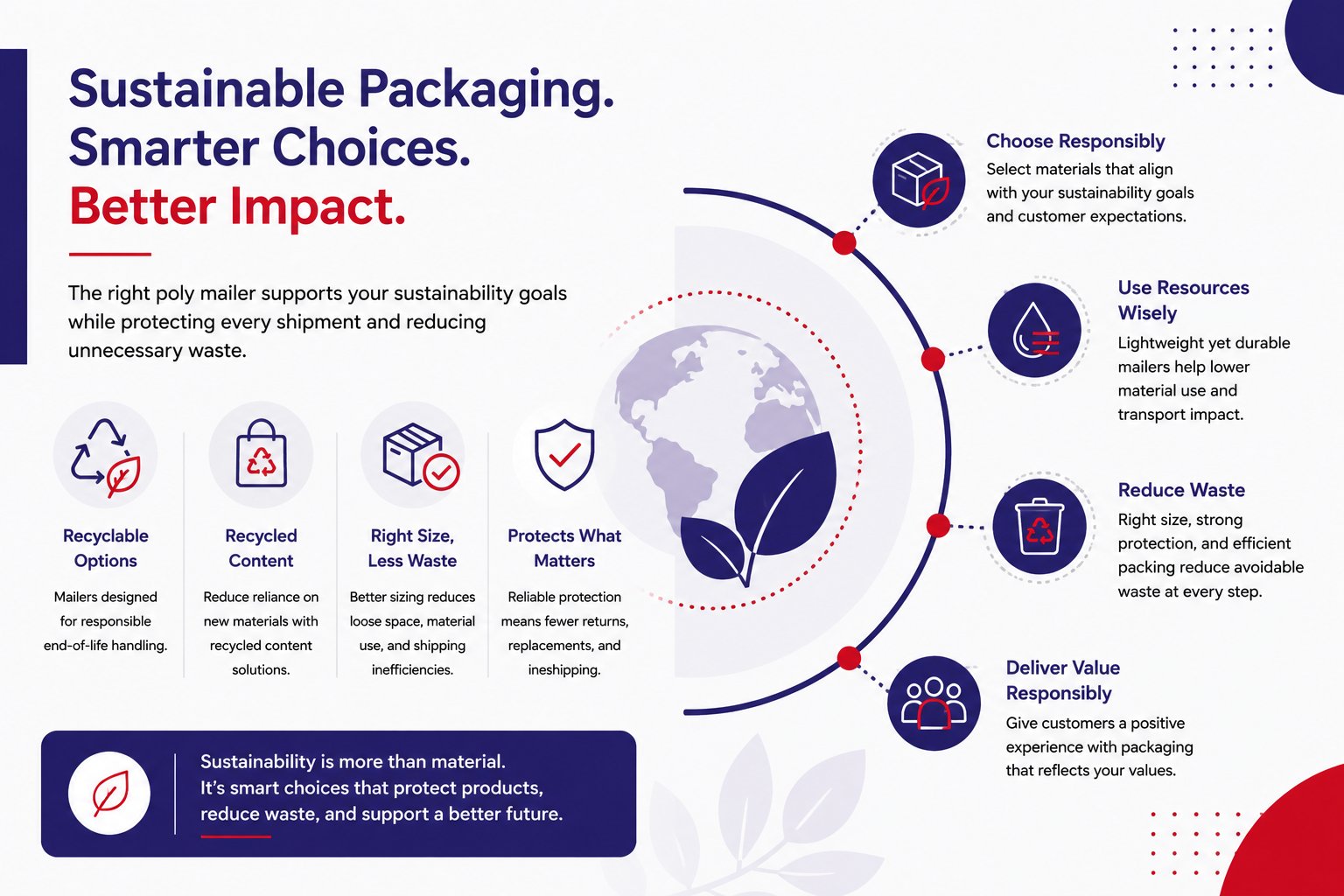
Poly mailers can support sustainability goals when the business chooses the right material and uses the right size for the product. The aim should be practical. Use packaging that protects the item, reduces avoidable waste, and gives the customer clear value without relying on vague green claims.
Recyclable mailers, recycled material options, and lighter packaging formats can all play a role. If sustainability is part of the next packaging review, the section on whether poly mailers can be eco friendly gives teams a clearer way to compare recycled content, recyclability, thickness, and protection needs before setting the next order specification.
Sustainability should also stay connected to product protection. A package that fails in transit can create more waste through returns, replacements, reshipping, and customer service work. Better packaging decisions balance material responsibility with shipment reliability.
Recycled Material and Recyclable Mailers
Recycled content can help reduce reliance on new material, while recyclable mailers can support better end of life handling where proper recycling options are available.
Good packaging claims should be easy to explain and easy to support. The strongest approach is to choose packaging that protects the shipment, reduces unnecessary material use, and keeps sustainability messaging honest.
Ready to review greener mailer options? Talk to PolyPak Packaging about recyclable materials, recycled content, and the right mailer size for your next order.
How To Choose a Poly Mailer Supplier
The supplier matters because packaging is not a one time purchase for growing businesses. It becomes a recurring operational need. A good supplier should help the team choose mailers that fit the product, order volume, branding needs, sustainability goals, and shipping process.
Start with the product range. The supplier should offer different mailer sizes, stock options, custom options, and related packaging formats. That makes it easier to match packaging to real products instead of forcing every shipment into the same format.
Then review quality and customization. A supplier should be able to discuss film strength, closure style, sizing, opacity, printing, and material options in a practical way. This is especially important when a business is ordering wholesale poly mailers for repeated use. One weak specification can affect thousands of shipments.
Sustainability options should also be part of the conversation. Recyclable materials, recycled content, biodegradable options, and correct claim wording should be reviewed before the order is finalized.
Supplier choice should support the full packaging cycle. That includes product fit, print needs, repeat ordering, production consistency, and reorder timing. Teams comparing vendors can use this guide on choosing a poly bag supplier to review product range, quality, customization, and material options before narrowing the order.
Questions To Ask Before Ordering
Before placing the order, ask practical questions:
- What product sizes ship most often?
- Which items need stronger film or better opacity?
- Will the mailer need printed branding?
- Is recycled content required?
- Are recyclable or biodegradable options available?
- What order volume is needed for the next cycle?
- How soon will the next reorder be needed?
The right answers help narrow the order before money is spent. They also reduce the risk of choosing a mailer that looks acceptable on paper but creates issues during packing or delivery.
Why Supply Reliability Matters Before You Reorder
Packaging delays can slow fulfillment quickly. That is why supply reliability should be reviewed before order volume rises.
Local manufacturing support can help with communication, production planning, repeat order control, and packaging consistency. It also gives teams a clearer path when they need to adjust sizing, print requirements, or order timing.
A supplier should make reordering easier, not more stressful. When packaging becomes a recurring pressure point, the supplier relationship needs to support both current shipment volume and future growth.
Choose PolyPak Packaging before your next reorder to secure the right mailer size, material, print option, and supply plan without last minute packaging pressure.
A Practical Buying Checklist Before You Request a Quote
Before requesting a quote, gather the details that affect product fit, protection, branding, and repeat supply. This helps avoid guessing and makes the quote more useful from the start.
Review these points first:
- Product size and shape
- Product weight
- Whether the item is flexible, sharp, fragile, or crush sensitive
- Mailer thickness needed for handling conditions
- Closure type and seal strength
- Privacy or opacity requirements
- Printed branding needs
- Recycled content or recyclable material requirements
- Monthly or seasonal order volume
- Storage space for mailer inventory
- Current packaging problems, such as tearing, poor fit, or slow packing
- Reorder timing before inventory runs low
This checklist is especially important when ordering bulk poly mailers because one small specification can affect many shipments. A clear quote should reflect how the product ships, how the team packs, and how the customer receives the order.
Take the Next Packaging Step With PolyPak Packaging
Packaging should not become a daily source of delays, damage concerns, or inconsistent presentation. The right mailer should protect the product, support the packing team, and make each delivery feel intentional.
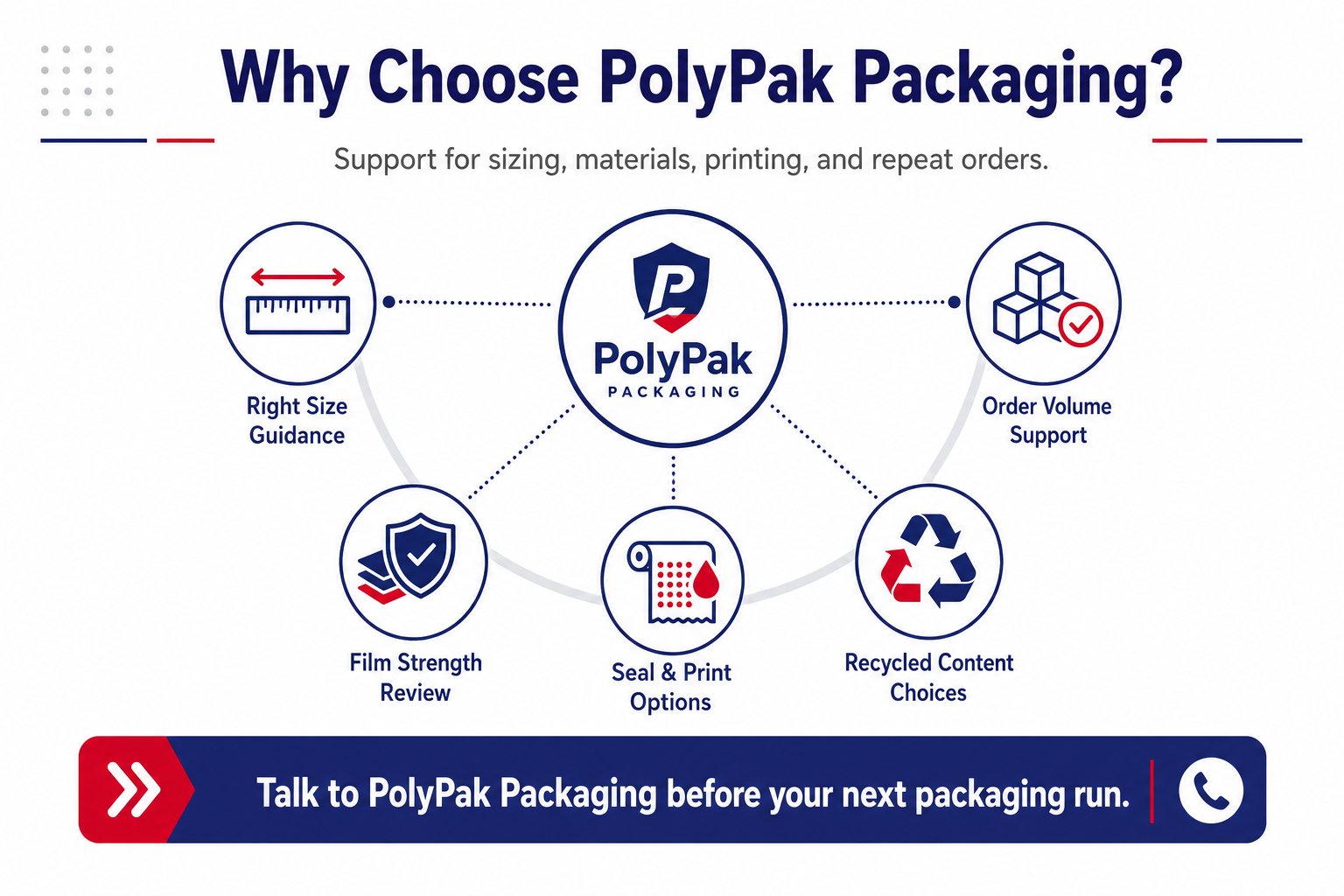
PolyPak Packaging can help businesses review sizing, film strength, seal needs, printing options, recycled content, and ordering volume before the next packaging run. That support matters when teams need dependable stock mailers, wholesale poly mailers, printed mailers, or recurring supply for growing shipment volume.
Your next mailer order should be easier to plan and easier to repeat.
Order the right mailers with PolyPak Packaging before packaging delays affect fulfillment.