

What a Poly Mailer Actually Is
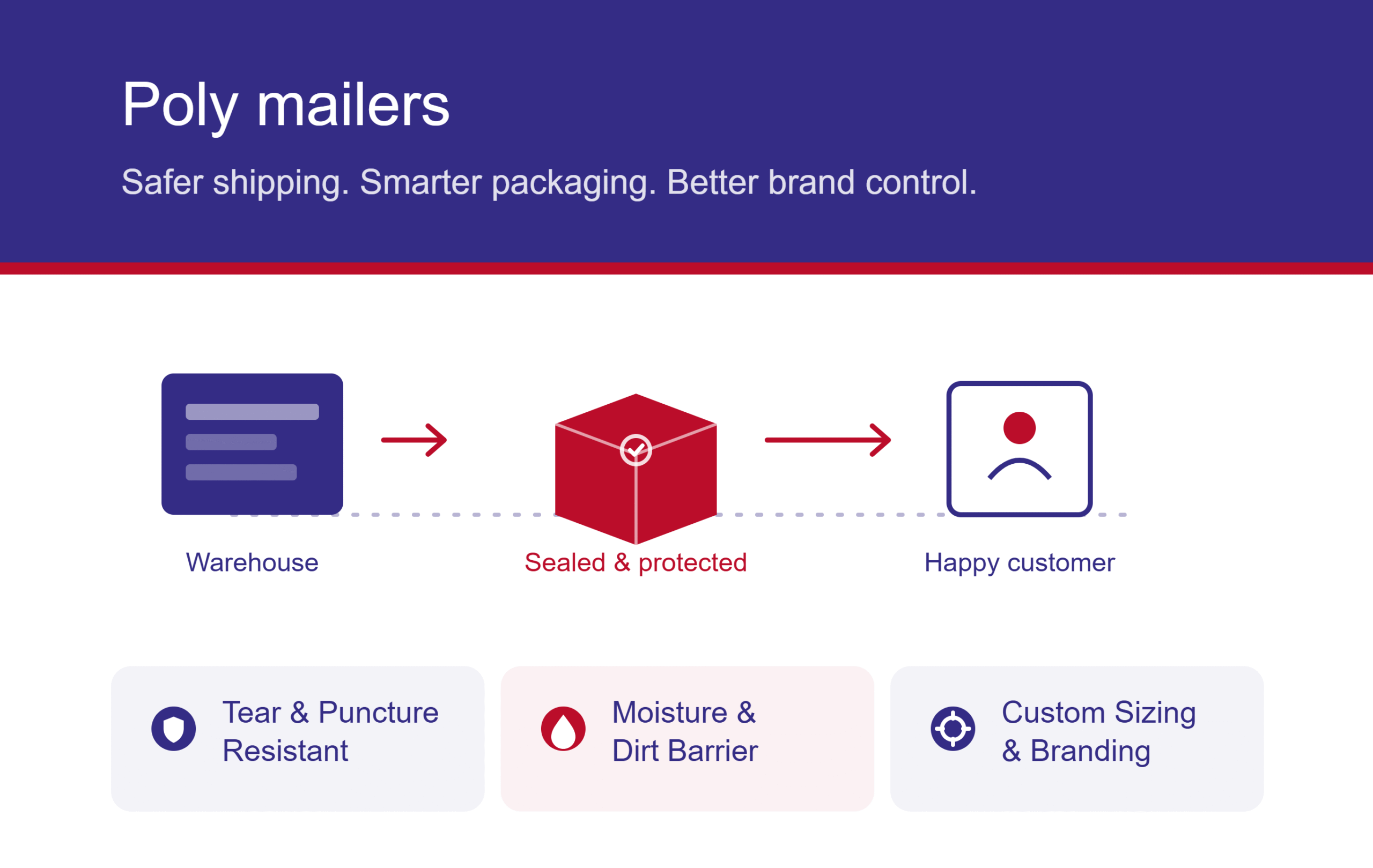
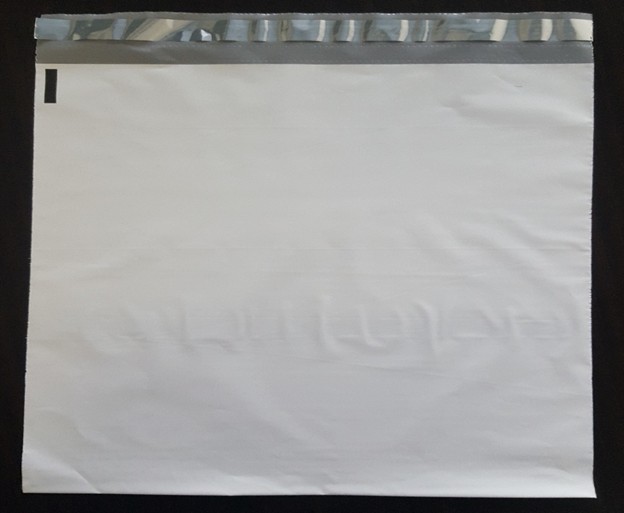
A poly mailer is a lightweight polyethylene shipping bag that protects ecommerce shipments from moisture, tearing, and handling damage while weighing far less than a box. It seals shut, resists water, and can be printed with a brand’s logo, which is why online sellers rely on these mailers for apparel, soft goods, and other items that do not need rigid protection.
The main takeaway: The right mailer combines film thickness, sealing method, and size to match the product inside it, and PolyPak Packaging manufactures that full range domestically, from lightweight stock mailers to custom printed and heavy-duty bags. Matching the mailer to the shipment, rather than defaulting to one size or thickness for every order, is what keeps products intact and shipping costs predictable.
Every ecommerce order arrives in packaging before it arrives as a product, and that packaging shapes the first impression as much as anything inside the box. A shipping bag that survives a delivery van, a mail sorting facility, and a front porch without tearing or letting in moisture does its job quietly. One that splits open or lets rain through does the opposite, and the customer remembers the damaged item more than the brand behind it.
Choosing a mailer looks simple from the outside: a plastic bag with a seal, but the material underneath that seal varies widely in thickness, film composition, and construction. Getting those choices right matters more for some products than others, and getting them wrong shows up as returns, damaged goods, and support tickets rather than as a line item on an invoice. Sellers scaling a shipping program eventually move from ordering off the shelf to working with a supplier who can hold a consistent specification across every reorder, which is where a dedicated manufacturer earns its place in the supply chain.
This guide walks through what these poly mailers are built from, how their specifications translate into real-world performance, and where PolyPak Packaging’s stock and custom lines fit into a shipping program. Along the way, it covers sizing, sealing, printing, and sustainability, so the choice comes down to matched specifications rather than guesswork. Each section builds on the last, moving from the material itself toward the practical decisions a shipping team actually has to make when placing an order.
Not sure which mailer fits your product line? Browse PolyPak’s product segments to compare mailers, heavy-duty bags, and specialty films side by side.
Why Packaging Shapes the Ecommerce Delivery Experience
A shipment is the only part of an online order a customer physically handles before the product itself, which makes the mailer part of the unboxing experience rather than an afterthought. Packaging that arrives intact signals that the seller paid attention to the details, while packaging that arrives torn or damp raises doubt about the product before the customer has even opened it.
How Weight Affects Shipping Cost
A lightweight shipping bag adds negligible weight to a shipment, while a box can add roughly half a pound before the product itself is factored in, and carriers price by weight and dimension. That difference compounds across thousands of shipments a month, which is why sellers moving soft goods, apparel, or other non-fragile items often standardize on flexible packaging rather than boxes.
How Storage Space Affects Warehouse Efficiency
Flat mailers stack compactly and take up a fraction of the space preformed boxes need, a meaningful factor for smaller operations with limited square footage or a home-based fulfillment setup. Bulk buying compounds that advantage further, since a pallet of flat mailers occupies far less warehouse space than the equivalent count of assembled boxes. None of this replaces good packing practice; proper sealing and appropriate padding still matter, but the base packaging format sets the ceiling on how efficient the rest of the process can be.
Signs the Current Packaging Is Hurting the Delivery Experience
- Products regularly arrive crushed, torn, or damp despite careful packing
- Returned items come back in mismatched or reused packaging that looks unprofessional
- Customer reviews or support tickets mention damaged or unclear packaging more than the product itself
- Warehouse staff spend noticeable time repackaging returns rather than using a resealable format
Curious how mailer choice affects your shipping spend? See how the right poly mailer can reduce packaging costs across a shipping program.
What Polyethylene Mailers Are and How They Perform
A poly mailer is a bag made from polyethylene, a lightweight, flexible plastic that resists moisture and water by nature rather than through an added coating. That base material is what allows a thin, pliable bag to keep water out during transit, something a similarly thin sheet of paper or cardboard cannot do.
PolyPak’s Named Film Formulations
Performance comes from how that polyethylene is engineered, not just that it is plastic. PolyPak’s mailer lines are built on named film formulations, each developed for a specific balance of strength, flexibility, and cost:
- Resilience film: used in the Mighty Lite mailer line
- Enviro-Tuff film: used in ProLite shippers and Re-Pak returnable mailers
- Rigur film: used in Dura Lite envelopes
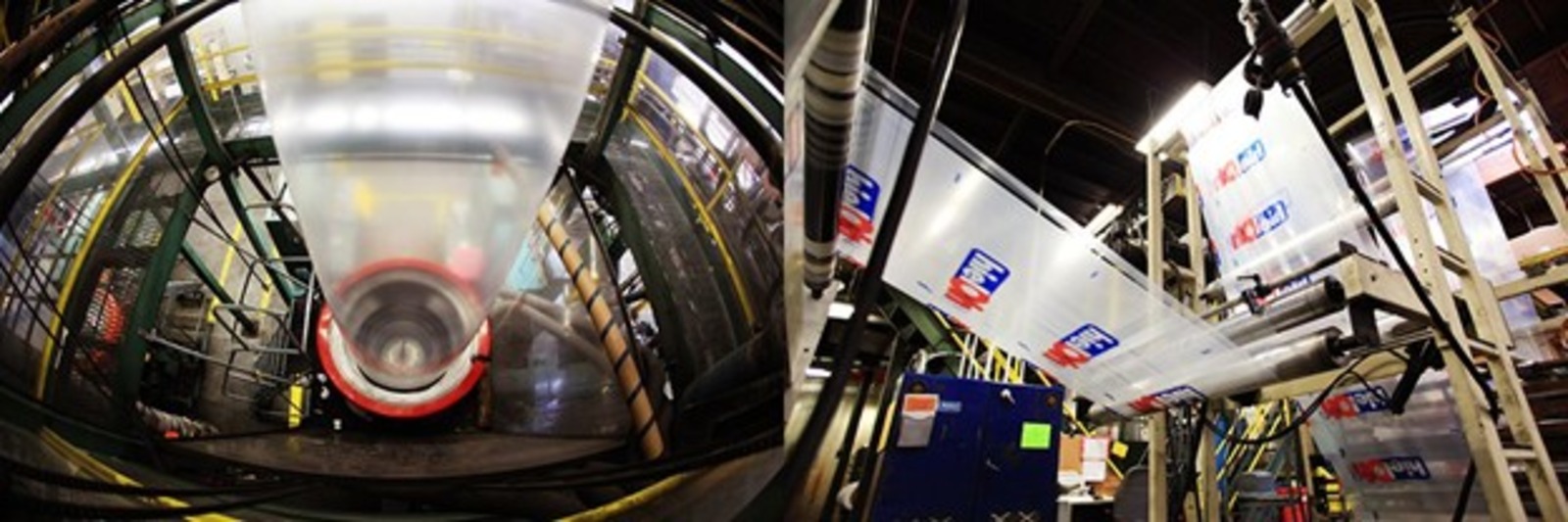
These are coextruded, meaning multiple layers of polyethylene are combined into one film, which is what gives a bag that is only a few thousandths of an inch thick the ability to resist punctures and tears under normal handling.
Self Sealing Closures
Self sealing closures are standard on most stock and custom mailers. Pairing that seal with a waterproof film is why flexible shipping bags have become the default packaging for apparel, books, cosmetics, and other items that do not require rigid support during shipping. For sellers ordering at scale, PolyPak also supplies wholesale poly mailers, which bring per-unit costs down while keeping the same film specification across the full order.
Want to see the full range of waterproof, self sealing mailers PolyPak manufactures? Explore PolyPak’s poly mailer and envelope lineup.
How Waterproof and Tear-Resistant Film Guards Products in Transit
Waterproofing and tear resistance work together, and a mailer only protects a shipment when both hold up at the same time. A bag that keeps out rain but splits at the seam under normal handling still lets a product arrive damaged, and the reverse is equally true.
PolyPak Packaging builds this dual protection into its named films rather than treating it as an add on. Resilience film, used in the Mighty Lite line, is engineered to stay strong and resist tears and punctures while remaining lightweight. Enviro-Tuff film, used in ProLite shippers and Re-Pak returnable mailers, is similarly built to stay waterproof under the folding, compression, and occasional rough handling a shipment experiences between a warehouse and a doorstep.
Handling Points Where Protection Matters Most
Building tear resistance and waterproofing into the film itself, rather than relying on a separate liner or coating, is what keeps a shipment protected for the full route between a warehouse and a customer’s door. That construction choice is one of the 7 features that separate durable poly mailers from basic ones, and it is why plastic bag manufacturers invest in film formulation rather than treating polyethylene as a commodity input.
Need a bag built for rougher handling conditions? See PolyPak’s mail order shipping bag options built on Resilience, Rigur, and Enviro-Tuff film.
Understanding Mil Thickness and Matching It to Your Products
Mil thickness is the standard way mailer strength gets measured, and it is a precise unit rather than a marketing term. One mil equals one thousandth of an inch, so a 3 mil bag is three thousandths of an inch thick. That number, more than any description of “heavy duty” or “standard,” is what actually indicates how much a mailer can withstand before it tears or punctures.
Matching Thickness to Your Shipment
A lighter mil thickness, such as the 2 mil Mighty Lite line, suits lightweight goods like folded apparel or soft accessories where minimizing shipping weight matters most. A heavier mil thickness, such as the 3 mil Re-Pak line, suits heavier items, sharper edges, or longer handling chains where added durability offsets the small increase in material.
Which mil thickness fits your product? PolyPak can walk you through sizing and thickness guidance to help you decide.
Choosing the Right Mailer Size for Common Shipments
A mailer only protects a product when the size matches what is inside, since a bag that is too large lets a product slide and shift, while one that is too small stretches at the seams and risks splitting. PolyPak’s stock sizes cover a broad range for exactly this reason, with common dimensions including 6 by 9 inches, 9 by 12 inches, 10 by 13 inches, 12 by 15.5 inches, 14 by 17 inches, 14.5 by 19 inches, and 19 by 24 inches, along with additional custom sizes available on request.
How to Measure for the Right Size
- Measure the product’s length, width, and depth first
- Add roughly one inch of width beyond those measurements
- Add roughly two inches of length beyond those measurements
- Choose the closest stock size, or request a custom size if nothing fits
A snug, unforced fit is the target, since a bag that requires stretching to close is already under stress before it ever reaches a carrier’s sorting equipment.
Sizing Guidance by Shipment Type
|
Shipment Type |
Sizing Guidance |
| Apparel such as T-shirts, hoodies, and dresses | A thicker mailer sized close to the folded garment helps guard against dirt and moisture |
| Books and magazines | A bag only slightly larger than the item helps prevent bending in transit |
| Household items such as toys and personal care goods | A mid-sized mailer gives adequate room without excess slack |
| Bulkier items such as small electronics and larger accessories | A larger shipping bag, sometimes with added padding, supports safer transit |
Getting size right also protects the brand experience, since an overstuffed or half-empty bag looks careless next to a properly fitted one, even when the product inside is identical. Sellers who carry several product lines often standardize on two or three sizes rather than one, which keeps packing simple without forcing every item into a single dimension.
Sizing decisions also interact with the sealing and film choices covered elsewhere in this guide, since a larger bag flexes and stresses differently than a small one during transit. Reviewing size alongside mil thickness before placing a first order, rather than treating each as a separate decision, tends to catch mismatches, such as a thin film paired with a large, heavier item, before they turn into a pattern of damaged shipments.
Have a product that does not fit a standard size? Request a custom poly mailer quote built to your dimensions.
Sealing Options From Self Seal to Heat Seal and Stitching
A mailer’s film only protects a shipment if the seal holds, which makes the sealing method as important as material thickness. PolyPak’s mailers and heavy-duty bags close through several methods, and the right choice depends on how the bag will be packed and how it needs to perform after sealing.
|
Sealing Method |
How It Works |
Typical Use |
| Self seal | Built-in adhesive strip bonds when folded and pressed | High volume mailer fulfillment |
| Heat seal | Film is fused with heat, often on automated equipment | Heavy duty and specialty bags |
| Stitching | Sewn closure suited to specific bag constructions | Select industrial and heavy duty applications |
| Sure-Safe Closure | Tamper-evident system that shows any reopening attempt | Security and evidentiary shipments |
Self Seal for High Volume Fulfillment
Self-sealing closures use a built-in adhesive strip that bonds when folded and pressed, letting a warehouse team seal orders quickly without tape guns or heat tools. This is the standard closure on most stock and custom mailers and is well suited to high-volume fulfillment.
Heat Seal and Stitching for Heavier Bags
Heat sealing fuses the film itself and is used on heavier-duty bags and specialty applications, including bags designed to run through form, fill, and seal automatic bagging equipment. Stitching appears on select heavy-duty and industrial bags where a sewn closure suits the product being packed.
Tamper Evident and Returnable Closures
PolyPak also offers a Sure-Safe Closure system on its security and evidence bags, which makes any attempt to reopen or tamper with a sealed bag immediately visible, a feature suited to shipments where evidence of tampering matters as much as the seal itself. Re-Pak returnable mailers use a dual closure design instead, allowing the same bag to be resealed for a return shipment rather than requiring new packaging on the way back.
Shipping something that needs a tamper-evident seal? See PolyPak’s Sure-Safe Closure and USPS-approved options.
How Custom Printing Turns Mailers Into a Branding Tool
A mailer is one of the few pieces of packaging a customer sees before they even open their order, which makes the outside of the bag a branding surface rather than plain packaging. Custom printing turns that surface into a consistent touchpoint, carrying a logo, colors, and messaging that reinforce the brand at the exact moment a customer’s attention is closest.
PolyPak Packaging prints custom bags using flexographic printing, a method that uses relief plates on rollers to apply ink directly to the film, and this is the most common approach for printing on polyethylene at production scale.
Printing Coverage and Color Options
- Front and back printing
- Edge-to-edge printing
- Wrap around printing
- Custom printing available in up to eight colors
- Fading- and scratch-resistant inks, with UV-resistant options for products exposed to light in transit or storage.
Why Professional Printing Outperforms In-House Methods
PolyPak’s flexographic printing process is built for production runs at a plastic bag manufacturer’s scale, not for sellers attempting to print their own mailers with inkjet or standard office equipment, which cannot hold fine detail or durability on a plastic film surface. Professional printing, run by a supplier that also converts and seals the bag, is what keeps a logo crisp and a color consistent across a full order run rather than varying batch to batch.
Ready to put your logo on the outside of every shipment? Learn about PolyPak’s printing techniques for custom mailers.
Where Stock Mailer Lines Fit Different Shipping Needs
Not every shipment needs a custom printed bag, and PolyPak’s stock lines exist for sellers who want proven film performance without a custom order minimum or lead time. Each stock line is built around a specific film and thickness, which gives it a distinct role in a shipping program rather than functioning as interchangeable options.
PolyPak’s Stock Mailer Lines at a Glance
- Mighty Lite Mailers: 2 mil Resilience film, positioned as the lightest weight shipper in the lineup
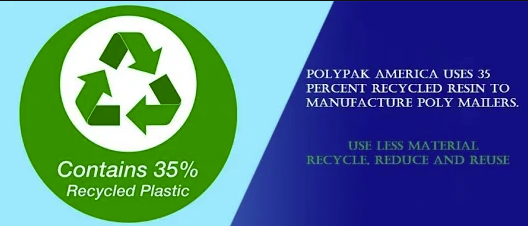
- ProLite Shippers: 2.5 mil Enviro-Tuff film, with up to 35% recycled material
- Dura Lite Envelopes: 3 mil Rigur film, the thickest film thickness in the stock range
- Re-Pak Returnable Mailers: built with a resealable dual closure for return shipments
Matching a Stock Line to Your Program
Selecting among these stock lines comes down to matching the product’s weight and fragility, and the shipping program’s need for returns, against what each film and thickness combination is built to do. That beats defaulting to whichever bag a seller has always used. A growing shipping program can also move between stock and custom poly mailers without switching suppliers, since PolyPak carries both under the same production process.
Which route fits depends on branding needs, volume, and lead time; how to choose between custom vs. stock poly mailers for your store walks through that trade-off in detail.
Want to compare PolyPak’s stock mailer lines side by side? Browse the Mighty Lite line and related stock mailers to find the right fit.
How Recyclable and Recycled Content Mailers Support Sustainability
Sustainability in packaging comes down to two related but separate questions: what a product is made from, and what happens to it after it is used. PolyPak’s mailer lines address both.
Recycled Content in PolyPak’s Stock Lines
Three of PolyPak’s four stock lines are built this way. Mighty Lite is the exception, since PolyPak’s published specifications for that line do not list a recycled content figure. Building recycled content into the other three lines reduces the amount of new plastic required for each order without changing how the mailer performs.
What Happens After the Mailer Is Used
On the other end of the product’s life, PolyPak Packaging states that its mailers are recyclable, and the company supports How2Recycle labeling, which lets a brand print a clear, standardized recycling message directly on the bag so customers know how to dispose of it correctly. That label matters because polyethylene film is not accepted in most curbside recycling programs the way rigid plastics are, so clear instructions materially affect whether a mailer actually gets recycled rather than discarded.
Environmental responsibility runs through PolyPak’s manufacturing as a standard feature, not a separate premium line. PolyPak America manufactures poly mailers and heavy-duty poly bags for shipping, agricultural, and security applications across the USA, and recycled content and recyclability are part of that same standard, available across stock and custom orders alike. That consistency is what lets a sustainability-minded brand keep its packaging the same as order volume grows.
Want packaging that carries a clear recycling message? Explore PolyPak’s sustainability approach to recycled content and recyclable mailers.
Why USA Manufacturing Supports Quality and Faster Lead Times
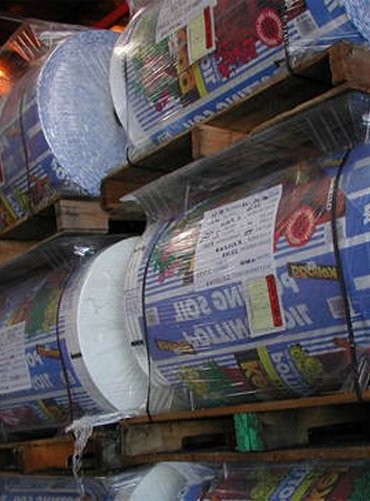
Where a mailer is manufactured affects more than a label. PolyPak Packaging manufactures its mailers, heavy-duty bags, and specialty films at its facility in Los Angeles, California, operating as an extruder, converter, and printer of polyethylene products under one roof rather than coordinating separate vendors for each stage. That combination is uncommon among plastic bag manufacturers in the USA, many of which handle only one stage of production and outsource the rest.
In-House Extrusion, Printing, and Converting
- Extrusion: mono-layer and multi-layer film from 8 to 120 inches in gusseted width
- Printing: multi-color inline presses plus an eight-color process printer
- Converting: bottom seal, side weld, fin seal, and tamper-evident closures across a wide range of sizes
Keeping extrusion, printing, and converting in-house lets custom orders move through production stages without waiting on outside suppliers at each step, and it is one of the clearest advantages domestic plastic bag manufacturers in the USA have over an import-based supply chain.
Domestic production also supports consistency across repeat orders, since the same equipment and formulations that produced an earlier order remain in place for the next one, rather than depending on whichever overseas facility has capacity that quarter. For sellers who reorder mailers regularly, or who place recurring wholesale poly mailer orders as volume scales, that consistency in film thickness, color, and print quality often matters as much as the initial lead time.
Want a manufacturing partner that handles the full process in-house? See PolyPak’s extrusion, printing, and converting capabilities.
Working With PolyPak Packaging on Custom Poly Mailers
By this point, choosing a mailer is no longer a guess. It comes down to matching film and mil thickness to the product, a size that fits without excess slack, a sealing method suited to how the bag will be packed and handled, and, where branding matters, printing that holds up in transit. That is the specification a shipping team actually needs, not a single mailer that is supposed to work for everything.
A Quick Specification Checklist
- Film and mil thickness matched to the product’s weight and fragility
- A size that fits without excess slack or forced stretching
- A sealing method suited to how the bag will be packed and handled
- Printing needs, if the outside of the bag should carry a logo or message
- Recycled content or recyclability requirements, if sustainability is a priority
Working through this checklist before placing an order is what keeps a mailer invisible in the best way, a package the customer never has to think twice about because it simply held up.
PolyPak Packaging works from stock lines for sellers who want a proven specification without a custom minimum, and from a custom process for sellers who need a specific size, film, color, or print run, so the checklist above applies either way. Because extrusion, printing, and converting all happen in-house, that specification stays consistent whether the next order is a single reorder or a move into higher volume production.
If your shipping program has outgrown a one size fits all mailer, or you are setting up packaging for a new product line, the next step is matching this checklist to your product rather than defaulting to whatever bag is already in the warehouse. Contact PolyPak to talk through film, size, and printing options for your next order, and leave with a specification built around your product rather than a generic default.